


How to Brief an Architectural Visualization Studio: A Guide for Property Developers
- Marketing and Info

- Jun 23
- 5 min read
The quality of an architectural visualization project is determined as much by the brief as it is by the studio. The best CGI rendering studios in the world cannot produce work that exceeds the clarity, ambition, and specificity of the brief they receive. Equally, a well-constructed brief given to a capable studio will consistently produce output that exceeds expectations.

For property developers in Indonesia and Malaysia who are commissioning CGI renders, cinematic films, or interactive visualization for the first time — or who want to improve the results they are getting from existing visualization partners — this guide explains what a strong brief looks like, what information to prepare, and what questions to ask before production begins.
What a visualization studio needs from you before they can produce anything
Before a single image is rendered, a visualization studio needs to understand four things: the architecture, the audience, the emotion, and the output.

1. The architecture
This seems obvious, but the quality and completeness of architectural documentation is the single biggest variable in visualization production quality and timeline.
At minimum, a studio needs:
Floor plans, elevations, and sections in CAD or PDF format
3D model files if available (SketchUp, Revit, Rhino, or similar)
Material and finish specifications — not just "timber flooring" but the specific species, finish, and plank width; not just "glass facade" but the glass type, framing profile, and mullion dimensions
Landscape and hardscape information — planting plans, paving types, pool dimensions, outdoor furniture specifications
Context information — the surrounding buildings, roads, and landscape that will appear in the background of exterior shots
The more complete this documentation, the more time the studio spends on creative work rather than making assumptions. Assumptions in visualization lead to revisions. Revisions cost time and money.
2. The audience
Who is the buyer for this project? What do they care about? What are they comparing this project against?
A visualization for a mass-market residential apartment in Tangerang has a different creative brief than a visualization for a luxury villa in Bali or a serviced apartment in Kuala Lumpur's KLCC precinct. The lifestyle references, the human figures used in the renders, the time of day, the level of detail in material specification — all of these decisions flow from a clear understanding of the target audience.
Tell your studio who they are visualizing for, not just what they are visualizing.
3. The emotion
What should a buyer feel when they see this project?
This is the question that most briefs skip — and it is the most important one. Technical accuracy is a baseline, not a differentiator. The renders that stop buyers mid-scroll, the films that create genuine desire for a project, the interactive experiences that make investors lean forward — they all start with a clear emotional objective.
Common emotional objectives for property visualization include: aspiration, calm, belonging, energy, exclusivity, warmth, prestige, modernity, connection to nature. These are not vague — they translate directly into lighting decisions, colour grading, camera angles, time of day, human activity, and atmospheric treatment.
If you cannot articulate what you want buyers to feel, your visualization partner cannot make them feel it.
4. The output
Where will these visuals appear, and in what format?
A hero render that will be printed at 3 metres wide on a billboard has different technical requirements than one that will appear on a website. A cinematic film for a sales gallery presentation has different aspect ratio and duration requirements than content for Instagram.
An interactive experience for a laptop-based presentation has different deployment requirements than one running on a dedicated touchscreen kiosk.
Define the output channels before production begins — not after the work is complete.
The brief document: what to include
A well-constructed visualization brief typically covers:
Project overview. Project name, location, developer name, architect, expected completion date, total number of units or floors, indicative price range.
Visualization scope.
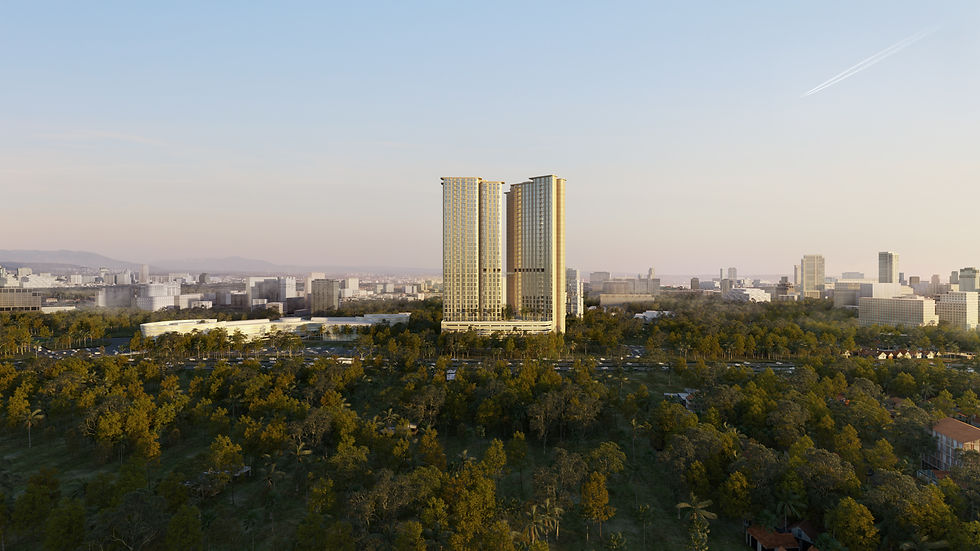
Which views are required? For exterior renders: north facade, south facade, aerial overview, street-level hero. For interiors: living room, master bedroom, kitchen, lobby. For films: duration, key scenes, narrative arc. Be specific — "a few key views" is not a brief.
Reference images.
Collect 10–20 reference images that represent the visual quality, atmosphere, and style you want to achieve. These do not need to be from the same project type — a hotel lobby reference can inform a residential living room visualization if the atmosphere is right. Moodboards communicate faster and more accurately than words.
Competitor references.
Which other projects are buyers comparing yours against? Understanding the visual landscape your project sits within helps the studio position your work appropriately — at the standard expected in your market segment, or deliberately above it.
Timeline and milestones.
When does the sales gallery open? When does the first digital marketing campaign launch? What are the internal approval deadlines? A realistic timeline produces better work than an impossible one.
Budget range.
Studios that know your budget can tell you immediately whether your scope is achievable and where trade-offs might be necessary. Studios that do not know your budget will either over-quote or under-deliver. Transparency here serves everyone.
Questions to ask an architectural visualization studio before you commission them
What is the creative process from brief to delivery? You want to understand how many rounds of feedback are built into the process, what milestones exist for approval, and what happens when revisions exceed the agreed scope.
Who will actually be working on this project? Many studios present the work of their best artists during pitches and assign junior staff to execution. Ask to meet the team members who will be responsible for your project.

What does your revision process look like? Revisions are normal in visualization production. What matters is how they are managed — how feedback is communicated, what constitutes a minor change versus a scope change, and what the cost and timeline implications are.
Can you show me work at a comparable scale and quality level? A studio's portfolio tells you what they have done. Ask specifically for examples that are closest to your project in terms of project type, market position, and visual ambition.
How do you handle design changes during production? Architecture changes. Plans get revised. For off-plan developments especially, the design may still be evolving while visualization is in production. Understand how your studio handles this, and what it costs.
What good looks like
The developers who consistently get exceptional visualization results share certain characteristics. They invest time in the brief before production begins. They are clear about the emotional objective, not just the technical specification. They treat the visualization studio as a creative partner, not a technical vendor.
They provide complete and accurate documentation. And they trust the creative team's judgment on decisions that affect quality — lighting, camera position, atmosphere — while maintaining clear authority over accuracy and brand alignment.
Architectural visualization is a creative collaboration. The developers who approach it that way get work that moves people. The ones who treat it as a commodity purchase get exactly that: commodity work.
At Kunkun Visual, we have worked with property developers across Indonesia, Malaysia, and internationally for almost a decade. Our briefing process is designed to extract everything we need to produce work that exceeds expectations — and to make that process as efficient as possible for development teams who are already managing complex projects.
If you would like to discuss an upcoming project, or simply want to understand what a strong brief looks like in practice, we welcome the conversation.
Contact us at info@kunkun3d.com or visit kunkunvisual.com/contactus
— Kunkun Visual
Bandung, Indonesia & Kuala Lumpur, Malaysia


Comments